




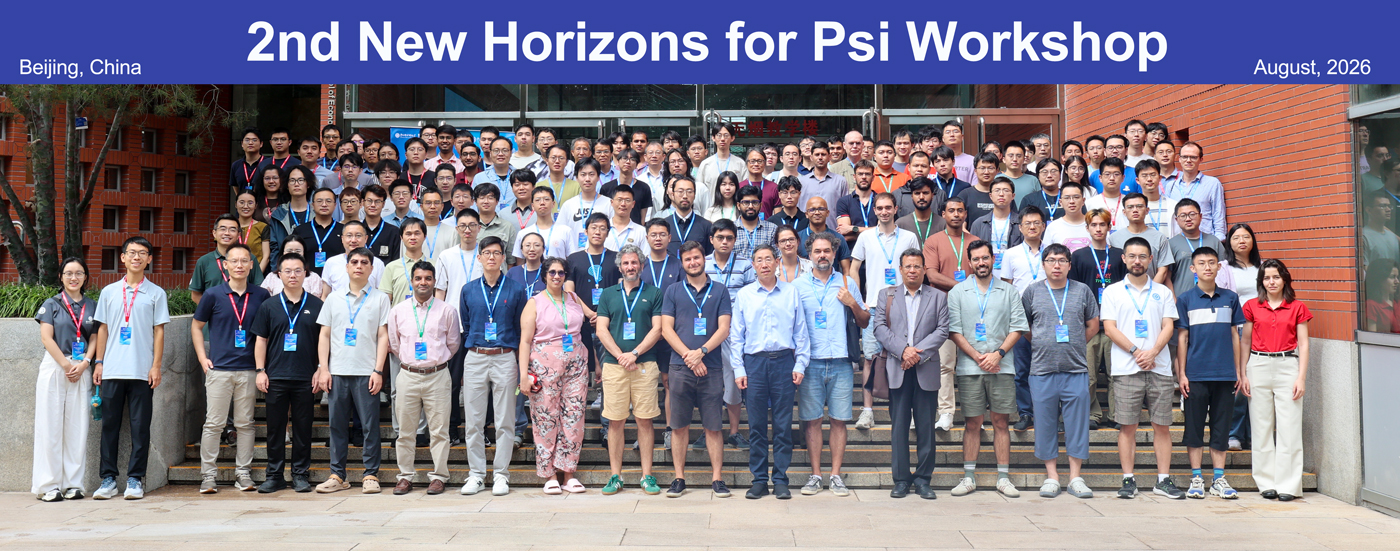
The 2nd New Horizons for Psi Workshop was successfully held in Beijing from 24 to 28 August 2026. The workshop was organised by the International Centre for Theoretical Physics Asia-Pacific (ICTP-AP) at the University of Chinese Academy of Sciences. More than 120 experts and scholars from 16 countries engaged in comprehensive academic exchange and discussion on the latest progress, core challenges and future directions of the interdisciplinary field of extreme gravitational environments and fundamental physics.
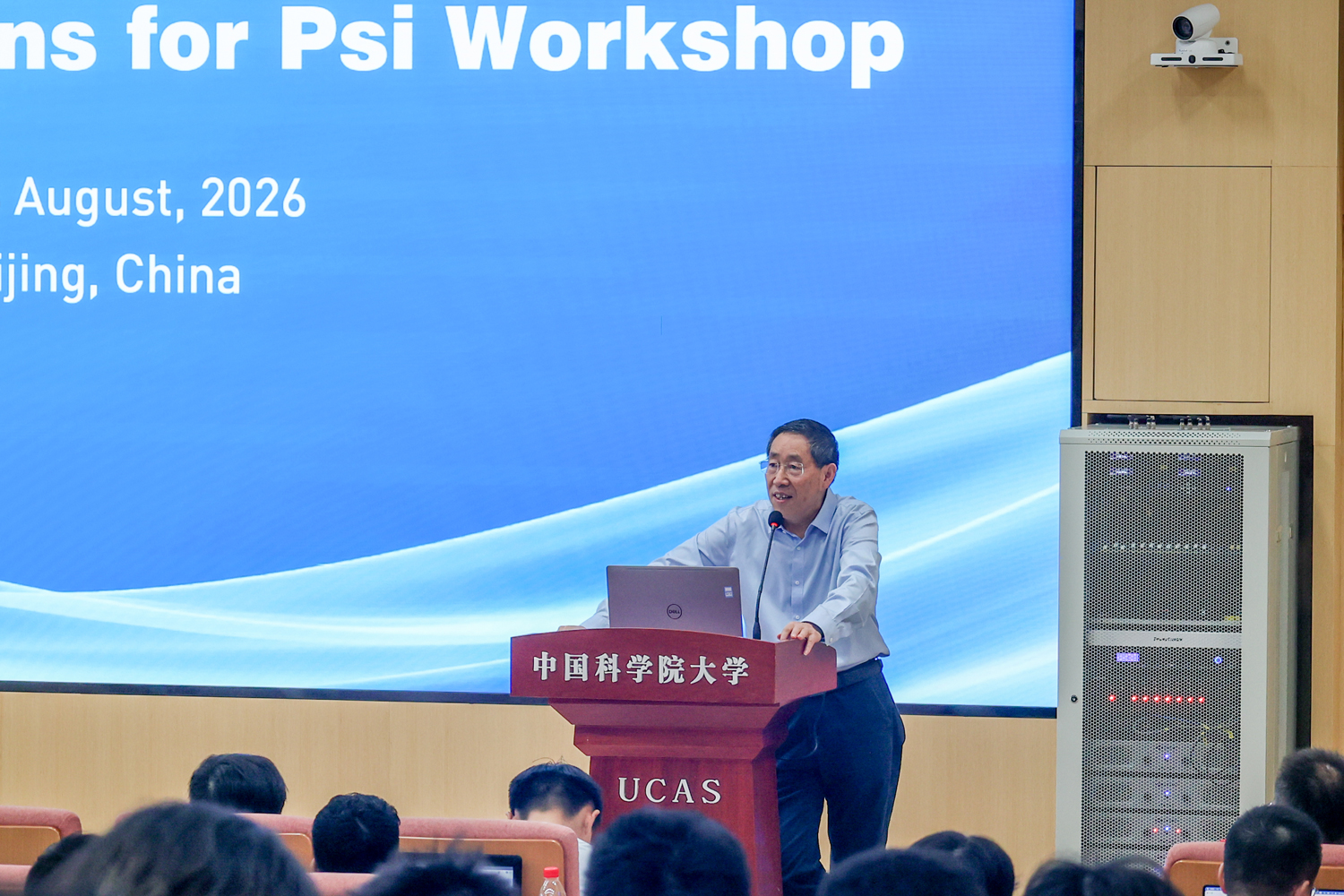
Prof. Yue-Liang Wu, Director of ICTP-AP, delivered a welcome address at the opening ceremony. He noted that the rapid development of black hole astrophysics and gravitational wave detection in recent years has created unprecedented opportunities for exploring the laws of fundamental physics. This workshop brought together experts and scholars in fields including black holes, gravitational waves and particle physics to strengthen interdisciplinary communication and explore the use of extreme gravitational environments around compact objects to investigate the laws of fundamental physics. This is not only timely and necessary but also consistent with the mission of the space gravitational wave detection “Taiji Programme” led by UCAS. Drawing on his research experience, he shared his thoughts on the development of fundamental physics, looked forward to the prospects of exploring new physics such as dark matter, dark energy and the early universe, and expressed his expectation for inspiring discussions during the workshop.
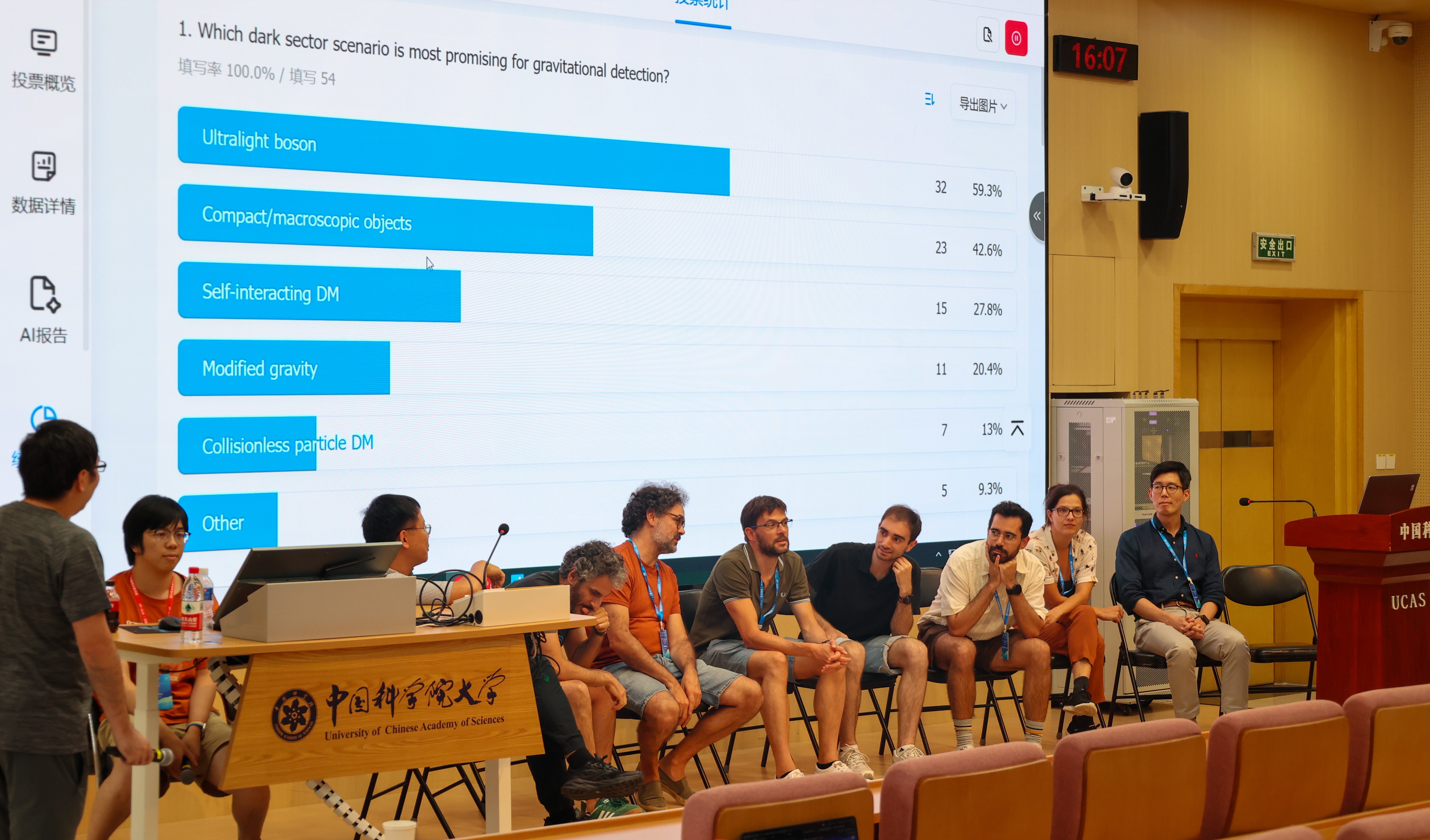
 The New Horizons for Psi Workshop was founded in Lisbon, Portugal, in 2024. Aiming to promote research in the interdisciplinary field of extreme gravitational environments and fundamental physics. This was the second edition. During the five-day workshop, more than 20 high-level invited talks and nearly 60 parallel talks on frontier areas such as black hole physics, gravitational wave astronomy and particle physics were organised. The workshop topics covered strong-field physics of black holes, environmental effects of black holes, gravitational waves and multi-messenger observations, fundamental properties of dark matter, early universe phase transitions, primordial black holes and other topics. Ultralight bosons around black holes became an important bridge connecting black hole physics, environmental effects, dark matter and multi-messenger observations at this workshop. There are talks focused on black hole superradiance mechanisms, the evolution of ultralight boson clouds around black holes and their impact on binary black hole mergers, supermassive black hole accretion, extreme mass-ratio inspirals, as well as detection of ultralight bosons using gravitational waves, pulsar timing arrays, solar system orbits and the S2 orbit around the Galactic Centre. In addition, with regard to future space gravitational wave detection, discussions were held on how to distinguish modified gravity, boson clouds and other black hole environmental effects, how to carry out numerical simulations, construct accurate gravitational wave waveform templates and develop efficient data processing algorithms.
The workshop provided a high-level academic exchange platform for theoretical physics researchers, promoting exchanges and cooperation among domestic and international scholars. The collision of ideas from different research fields will inspire the discovery and breakthrough of new physics.

 Standard
Login
Standard
Login SEP Login